
Facilitation, care and ethics

Key direction
Future SEF processes should be supported by external facilitators, ideally two or more, to help hold the space with care and reduce pressure on participants who are also personally involved in the programme being evaluated.
Areas to develop
- Invite external facilitators, especially when the evaluation involves sensitive or relational experiences.
- Work with at least two facilitators where possible, so that responsibility for care, documentation and group dynamics is shared.
- Define what good and respectful documentation looks like.
- Clarify what should be recorded, what should remain private, and how participants can shape those decisions.
- Treat confidentiality as something co-created with participants, rather than something communicated by facilitators.
Language and shared understanding

Key direction
Future versions of the SEF should pay closer attention to the terms used across the framework, as language can shape how participants understand their roles, relationships and agency.
Areas to develop
- Clarify terms such as students, student partners, staff and collaborators.
- Reflect on whether these terms create confusion, hierarchy or misunderstanding.
- Clarify what evaluation means within the SEF.
- Make clear that evaluation is not only about measuring what happened, but also about learning, acting and adjusting while the work is still unfolding.
- Clarify how confidentiality works in practice, especially when participants are co-creating knowledge together.
Method refinement

Key direction
Some SEF activities need further development so they can better support reflection without becoming restrictive, extractive or difficult to navigate.
Areas to develop
Body mapping
- Research body mapping more deeply, especially around body representation, accessibility and inclusive participation options.
- Review whether body mapping during onboarding can feel exploitative or exposing.
- Find alternative ways for participants to “take up space” at the beginning of the programme without requiring forms of sharing that may feel uncomfortable.
Midway check-in
- Position the Midway Check-in more intentionally within the programme timeline.
- Ensure it happens early enough to influence decisions, but late enough for participants to have meaningful experiences to reflect on.
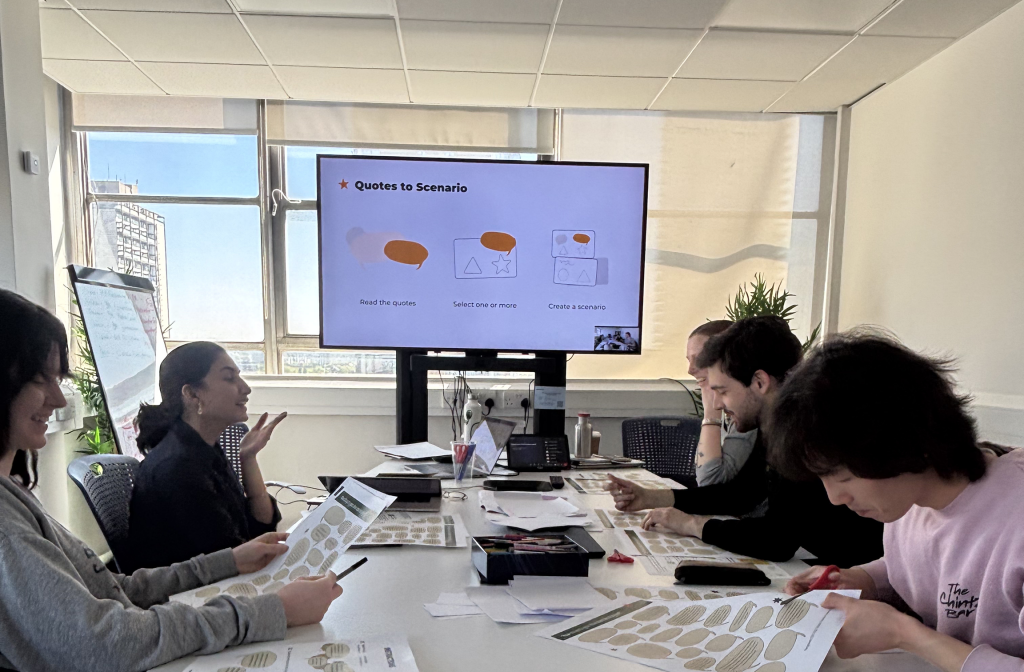
- Further develop the Participation Ladder activity used during the Midway Check-in.
- Move beyond the current bidirectional ladder structure, as it can restrict how participants describe complex experiences of participation.
- Explore a more flexible “build your own snakes and ladders” format, where participants can represent movement, setbacks, blocks and unexpected routes.
- Use movable parts rather than fixed writing, so participants can rethink and reposition.
Adaptability and future testing

Key direction
The SEF should be tested in other contexts to understand what can travel, what needs to change, and where the framework may have limitations.
Areas to develop
- Use the SEF with different programmes, cohorts or institutional contexts.
- Identify which activities are adaptable and which are more context-specific.
- Understand what changes when the SEF is facilitated by people outside the original project team.
- Keep the framework flexible enough to respond to different groups, needs and institutional conditions.